Related series by DeepJournal: The Other Face of Barack Obama.
-
By Daan de Wit
Translated by Ben Kearney
Also under President Obama Iran continues to dominate the world agenda. Iran is being presented as a crucial problem that must be solved. The Iran Problem is one with several layers. The uppermost layer is that Iran is a potential threat to world peace. What are the facts and the fiction that make up this first layer?
 Critical thinker Noam Chomsky recently made it clear following a reading at the Harvard Memorial Church (23:00) that the foreign policy of President Barack Obama is a continuation of the policy from the second term of his predecessor, President Bush. This pronouncement means that if Bush had served a third term he would have maintained the same foreign policy as Obama - a not unreasonable hypothesis from Chomsky. Chomsky explains (16:45) what this means for the Iranian situation. He cites UN Security Council Resolution 1887, which criticizes Iran and calls on all countries to resolve conflicts within the bounds of the non-proliferation treaty without the threat of force. 'That particular part of the resolution was not exactly headlined here, for a simple reason. It was directed at the two countries that are regularly threatening the use of force: the United States and Israel'.
Words and deeds against Iran
Whoever wants to understand what Chomsky means in the concrete sense need only open the newspaper. It looks like old news from the Bush years, but it's actually news from 2010, after a year of Obama and his Nobel Peace Prize. 'We must recruit the whole world to fight Ahmadinejad'. 'Who is Ahmadinejad? A dictator!', according to the Israeli President Shimon Peres, last month. These statements were quickly followed up by Secretary Clinton, who said she feared that Iran was drifting toward a military dictatorship. But it's not limited to words alone. In January it was made known that 'the Pentagon had decided to double the value of emergency military stockpiles it stores in Israel to the value of $800 million'.
Other countries in the region are also being armed by the U.S. so as to offer a counterweight to the danger from Iran. The Guardian writes: 'The US is dispatching Patriot defensive missiles to four countries – Qatar, United Arab Emirates, Bahrain and Kuwait – and keeping two ships in the Gulf capable of 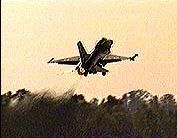 shooting down Iranian missiles. [...] Besides the new missile deployment, Washington is also helping Saudi Arabia to create a 30,000-strong force to protect oil installations and other infrastructure, as well as expanded joint exercises between the US and military forces in the region. The move is a continuation of the military build-up begun under former president George W Bush.
In the past two years, Abu Dhabi has bought $17bn (£11bn) worth of weapons from the US, including the Patriot anti-missile batteries and an advanced anti-missile system. UAE recently bought 80 US-made fighter jets. It is also buying fighters from France. Petraeus said in a speech in Bahrain last year the UAE air force "could take out the entire Iranian air force, I believe".' According to the Washington Post, it's 'part of a broader push that includes unprecedented coordination of air defenses and expanded joint exercises between the U.S. and Arab militaries, the officials said. All appear to be aimed at increasing pressure on Tehran'.
Chomsky: A threatened Iran steps up threat
The constant military and diplomatic threat from the U.S. that according to Chomsky has been emanating first from Bush and now from Obama - in combination with the threat from Israel and its allies - are actions that are not going unanswered. Chomsky sees this as having far-reaching consequences (19:20): 'Those are all threats, constant, verbal, actual. And the threats do have the effect of inducing Iran to develop a deterrent'. Thus the deterrent that Iran is developing is a consequence of feeling threatened. Chomsky adds that he doesn't know if the country is actually developing nuclear weapons. He does say that Iran knows that if it weaponized just one rocket with a nuclear warhead, 'the country would be vaporized in five minutes'.
Project Iran requires more patience than Iraq
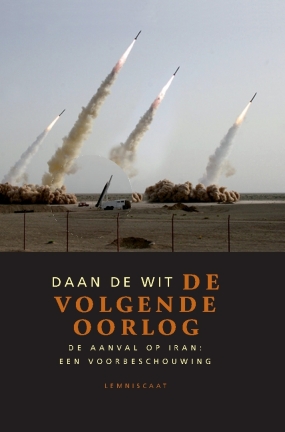 The Iran Project - regime change in Iran - is still on track. As I demonstrate in my book The Next War - The Attack on Iran - A Preview, a public, diplomatic trajectory is being pursued that runs parallel to a hidden, clandestine process. It's the same modus operandi as in the case of Iraq, except that this time more patience is being execercised because the circumstances demand it.
Just like with Iraq, non-existent weapons of mass destruction are being used as an argument, and just like with Iraq, it ultimately gets down to strategic political concerns and energy interests. Yet the threat of Iran as a nuclear power is not a minor detail. It really does play a leading role in the minds of American and Israeli leaders. Not because of the argument propagated by the media - namely the danger of an Iranian attack. The reason that the nuclear weapons issue is playing such a major role is because the moment that Iran becomes a nuclear power, it becomes untouchable.
Race to Iran leads to conflict
These conflicting interests concerning the same subject - Iran as a nuclear power - mean that both parties have found themselves in a race that is heading towards a situation in which there is going to be only one winner and one loser. If the combo of Israel and America wins, Iran doesn't become a nuclear power and won't assume the position in the region that it aspires to. If Iran gets to the point where it is capable of producing a nuclear weapon - or if it actually goes ahead and does that - then it has won the race. One of the consequeces of this will be that Israel will have to give up its dominant position in the region in favor of Iran. The former Russian premier, Primakov, points out that Iran has already seen its influence increase as a result of U.S. intervention in Afghanistan and Iraq, both former enemies of Iran. Another result will be that the U.S. won't be able to lay claim to Iranian mineral resources, which will cause Iran to expand energy deals with countries like China, America's big competitor.
Because the interests surrounding the geopolitical game involving Iran are so great, and because there can be only one winner in this race, a conflict that comes during the last stage of the race is almost unavoidable.







 mail this article
|
mail this article
|
 print
|
print
| 
