
|
NEDERLANDS | ENGLISH
|
|
|
|
|


|
|




|
21 maart 2007
|
 mail dit artikel
| mail dit artikel
|
 print
| print
|  
Was it Khalid Sheikh Mohammed who confessed responsibility for 9/11?
By Daan de Wit
The Dutch in the original article has been translated into English by Ben Kearney The confessions made by KSM while taking responsibility for the planning of more than thirty attacks raise the following question: Was it Khalid Sheikh Mohammed who confessed responsibility for 9/11? And while considering the coverage of Mohammed, still more questions arise, such as: Was he ever extradited to the U.S.? And is he still actually alive? 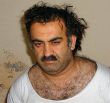 Problems could be seen in the coverage of Mohammed's confessions from the very beginning. 'Mr. Mohammed, 41, is an ethnic Pakistani who grew up in Kuwait and graduated from North Carolina State Agricultural and Technical State University in 1986. He was captured on March 1, 2003, in Rawalpindi, Pakistan, and was held in the secret C.I.A. prison system, where he is believed to have been subjected to harsh interrogation', reports The New York Times. Despite having been educated at an American university, he wasn't able to speak proper English, as the transcript [PDF] of his confessions indicates. What's more, the English he employed was exceptionally broken - the New York Times calls it a 'rambling statement'. Problems could be seen in the coverage of Mohammed's confessions from the very beginning. 'Mr. Mohammed, 41, is an ethnic Pakistani who grew up in Kuwait and graduated from North Carolina State Agricultural and Technical State University in 1986. He was captured on March 1, 2003, in Rawalpindi, Pakistan, and was held in the secret C.I.A. prison system, where he is believed to have been subjected to harsh interrogation', reports The New York Times. Despite having been educated at an American university, he wasn't able to speak proper English, as the transcript [PDF] of his confessions indicates. What's more, the English he employed was exceptionally broken - the New York Times calls it a 'rambling statement'.This stands in stark contrast to this depiction of Mohammed, made right after his arrest by terrorism expert Dr. Rohan Gunaratna in an article for The Guardian, under the headline Womaniser, joker, scuba diver: the other face of al-Qaida's No 3: 'A master of disguise, he often tinted his hair, using wigs, sporting beards and moustache, and wearing glasses. He wore Asian or western clothes, spoke very good English and moved about frequently.' On the same day, the Indian daily The Tribune wrote: 'Fluent in Arabic, English and Urdu, Mohammed is known to have used 60 aliases. His identity was kept secret even from many of his Al-Qaida operatives. When Mohammed was not plotting destruction in Manila, he was partying, Philippine intelligence agents were quoted as saying. Mohammed took up with a bar girl he met at the Cotton Candy Club. Later he hired a helicopter and pilot to impress a female dentist he was courting.' This doesn't fit the profile of a devoted Muslim who wants to carry out attacks in the name of Allah. The question remains as to just who this man is who recently made front-page news and possesses a terror resume so impressive as to be unbelievable. He is said to be responsible 'from A to Z' for the 9/11 attacks, but has also had his sights set on attacking President Carter, the New York Stock Exchange and the Panama Canal. Paul Joseph Watson writes about one of Mohammed's confessions: '[...] it emerged that one of the targets he identified, the Plaza Bank, was not founded until 2006, four [sic] years after the alleged Al-Qaeda mastermind's arrest.' The Al-Qaida man is also said to have been present during the murder of journalist Daniel Pearl. Whatever the case may be, in a 2003 article entitled Mystery surrounding Khalid Sheikh Mohammed, B. Raman writes: '[...] Pakistani security agencies, while investigating another case, fell upon a group of some other terrorists belonging to the Lashkar-e-Jhangvi and the Harkat-ul-Mujahideen (International). During the interrogation, they surprised Pakistani and US intelligence agencies by claiming it was they who had killed Pearl. They led the police to a spot on the outskirts of Karachi where Pearl's remains were found buried. Forensic tests confirmed their finding and the remains were subsequently handed over to his widow.' The New York Times notes with subtlety: 'It is not clear how many of Mr. Mohammed's expansive claims were legitimate.' This conclusion should be considered in light of this excerpt from the DeepJournal series on the American practice of torturing suspects. 'According to the sources, CIA officers who subjected themselves to the water boarding technique lasted an average of 14 seconds before caving in. They said al Qaeda's toughest prisoner, Khalid Sheik Mohammed, won the admiration of interrogators when he was able to last between two and two-and-a-half minutes before begging to confess', reported ABC.' Before even getting to the question of who the man was who made all these confessions, there are other questions. Such as: Did he really make these confessions, has Khalid Sheikh Mohammed ever been extradited to the U.S., and is Khalid Sheikh Mohammed actually still alive? Beginning with the first question, it's worthwhile to take a look at the book Crossing the Rubicon. On page 580, Mike Ruppert writes of 'KSM': 'The US government has failed to produce - publicly, or for the one failed 9/11 criminal prosecution in Germany of Mounir el Motassadeq - either bin al-Shibh or KSM as material witnesses. No mere mortal has seen either one of them since their reported captures. Credible reports have told us that KSM was killed. Any information alleged to have come from these 'captured' suspects has come in the form of "press-release prosecution" by the government. None of it has ever been independently authenticated.' Press-release prosecution is a term that also applies to the case of Mohammed's confession, which brings the validity of the document [PDF] into question. The only argument made so far in support of the claim that the document is a genuine account of the case against Mohammed is the word of the Bush Administration. As to whether or not Mohammed was even in the U.S. when he made these statements, Reuters reported the day after the arrest of the man in 2003: 'Pakistan's interior minister on Sunday denied reports that suspected September 11 mastermind Khalid Sheikh Mohammed had been handed over to the United States and said he was still in Pakistan.' On the following day, the aforementioned B. Raman wrote in his article: '[...] Pakistani authorities did a volte face within 24 hours and denied that Mohammad had been taken out of Pakistan. He was being interrogated in Pakistani territory by Pakistani officials, they maintained. Faisal Saleh Hayat, Pakistan's interior minister, even denied that the US had requested his extradition. He added that Mohammad would first be tried in Pakistan for offences before considering his extradition. Hayat confounded the confusion by saying since Mohammad is a Kuwaiti national, if at all he is extradited, he would be sent to Kuwait and not to the US. Why this confusion? No credible answer is available.' Adding to the confusion is the question of whether Khalid Sheikh Mohammed is even still alive. In the year prior to his arrest, the Asia Times wrote that Mohammed was allegedly killed during his arrest on September 11th of that year (2002). His wife would have identified the body, after which it would have been buried in Karachi under the watch of the FBI: 'The FBI, still keen to take Shaikh Mohammed alive, teargassed the area, and a number of people were captured. However, despite instructions to the contrary, a few Pakistan Rangers entered the flat, where they found Shaikh Mohammed and another man, allegedly with their hands up. The Rangers nevertheless opened fire on the pair. [...] But now it emerges that an Arab woman and a child were taken to an ISI safe house, where they identified the Shaikh Mohammed's body as their husband and father. The body was kept in a private NGO mortuary for 20 days before being buried, under the surveillance of the FBI, in a graveyard in the central district of Karachi. The widow subsequently underwent exhaustive interrogation in the custody of FBI officials, during which she revealed details of people who visited her husband, and of his other contacts and plans. News of the death of Khalid Shaikh Mohammed was intentionally suppressed so that officials could play on the power of his name to follow up leads and contacts.' 'Until we hear more, the mystery of who KSM is and what he was responsible for is still a mystery', writes Robert Baer, former CIA agent assigned to the Middle East.
____________________________________________________________________________
DeepJournal Meld je aan voor de gratis mailing list. |
|
9 september 2013 |
Waarom ligt Syrië onder vuur? - Deel 4
Wie onder de oppervlakte kijkt, ziet dat Syrië onder vuur ligt vanwege de belangen van de betrokken partijen. 'Syrië' gaat over macht, geld, invloed en energie.
8 september 2013 |
Waarom ligt Syrië onder vuur? - 3
Wie vorm en inhoud scheidt, ziet dat de strijd om Syrië vooral niet gaat over waar het over lijkt te gaan. De vorm maskeert de inhoud. Syrië en Iran zijn stukken op een geopolitiek schaakbord.
7 september 2013 |
Waarom ligt Syrië onder vuur? - Deel 2
Bij grote militaire conflicten die aanzienlijke humantaire en economische gevolgen kunnen hebben, is het goed te kijken naar de belangen van de betrokken partijen en naar de rol van de media bij de verslaggeving van de feiten.
6 september 2013 |
Waarom ligt Syrië onder vuur? - Deel 1
Aan de oppervlakte is het duidelijk: de VS willen Syrië bevrijden van een wrede dictator die zijn bevolking met gifgas bestookt. Onder de oppervlakte is er iets heel anders aan de hand.
1 april 2013
Albert Spits: Creëer je eigen financiële veiligheid
Spits beschrijft hoe de euro richting de uitgang gaat en dat je intussen maar beter waarde voor je geld kunt kiezen. Hij raadt iedereen aan zich voor te bereiden op een systeemkrach.
|